

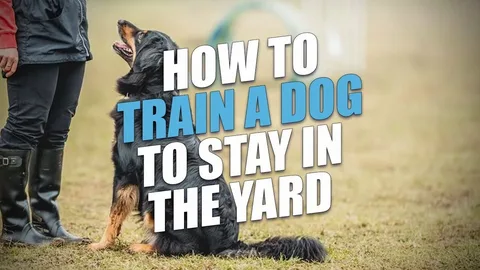
Keeping your dog safely inside your yard is one of the biggest challenges for pet owners in the USA. Many dogs run after cars, chase squirrels, bark at neighbors, or escape through small gaps in the fence. If you are worried about your dog’s safety, you are not alone. Thousands of American dog owners search every month for how to train a dog to stay in the yard without stress or harsh punishment.
This complete guide will help you understand why dogs leave the yard, how to stop escape behavior, and how to train your dog step by step using positive and safe methods.
Why Dogs Leave the Yard
Before training begins, you must understand the root problem. Dogs usually leave the yard because of:
- Boredom – Not enough exercise or mental stimulation
- Curiosity – New smells, sounds, or animals outside
- Lack of training – They do not understand boundaries
- Separation anxiety – Trying to follow their owner
- Fear – Loud noises like fireworks or thunderstorms
- Weak fencing – Gaps, low fences, or broken gates
In many US neighborhoods, open yards, delivery drivers, children playing, and wildlife make it more tempting for dogs to explore.
The good news? With proper training and consistency, you can teach your dog to stay safely inside your yard.
Benefits of Training Your Dog to Stay in the Yard
Training your dog to respect yard boundaries offers many benefits:
- Protects your dog from traffic accidents
- Prevents fights with other animals
- Reduces complaints from neighbors
- Avoids fines in cities with leash laws
- Builds trust between you and your dog
- Gives your dog safe freedom to play
A well-trained dog enjoys outdoor time without constant supervision stress.
Step-by-Step Guide to Train a Dog to Stay in the Yard
1. Start with Secure Boundaries
Training works best when the environment supports it. Check your yard for:
- Holes under fences
- Loose panels
- Low fence areas
- Open gates
- Spaces between fence boards
If fencing is not possible, you can consider:
- Temporary playpens
- Tie-out systems (only supervised)
- Boundary flags for training
- GPS collars for safety backup
In many US suburbs, 6-foot wooden or vinyl fences work best for medium and large breeds.
2. Teach Basic Obedience First
Before yard training, your dog must understand basic commands:
- Sit
- Stay
- Come
- Leave it
If your dog does not respond reliably, start with indoor training first. Use small training treats and short sessions (5–10 minutes). Keep training positive and rewarding.
Dogs learn faster when training feels like a game.
3. Introduce the “Stay in the Yard” Boundary Training
Now it is time for real yard training.
Step 1: Use a Long Leash
Attach a 15–30 foot training leash. Walk your dog around the inside edge of the yard.
Step 2: Mark the Boundary
When your dog approaches the edge, say “Stop” or “Back.”
If they stop, reward immediately with praise and treats.
If they try to cross, gently guide them back and reward them when they return.
Repeat this daily.
Step 3: Practice with Distractions
Have a family member walk outside the fence or roll a ball near the edge.
If your dog stays inside the boundary, reward heavily.
Consistency is key.
4. Use the “Come” Command as Safety Backup
No matter how well-trained your dog is, always strengthen the “come” command.
In the USA, many dogs run toward:
- Mail trucks
- Delivery drivers
- Other dogs
- Squirrels
- Deer
Practice calling your dog randomly during yard time. Reward generously when they respond immediately.
Never punish your dog after they come back — even if they tried to escape. Punishment weakens recall training.
5. Increase Exercise and Mental Stimulation
Many escape problems happen because dogs have too much energy.
For American dog owners, busy work schedules often mean dogs spend long hours alone. This leads to digging and jumping fences.
Daily needs:
- 30–60 minutes of walking
- Fetch or tug games
- Puzzle toys
- Obedience refreshers
- Social interaction
A tired dog is less likely to escape.
6. Stop Digging Under the Fence
If your dog digs:
- Bury chicken wire along fence lines
- Place large rocks at digging spots
- Provide a designated digging area
- Increase playtime
Digging is often boredom-driven, especially in high-energy breeds.
7. Prevent Jumping Over Fences
Jumping dogs need:
- Higher fencing
- Fence toppers
- Removal of objects near fence edges
- More physical activity
Some athletic breeds can jump over 6 feet. Training combined with physical barriers works best.
8. Consider Invisible Fence Systems (With Caution)
Some US homeowners choose invisible fence systems. These systems use boundary wires and training collars.
However, they require proper training. Without training, they can confuse or stress the dog.
Always use them as a supplement — not a replacement — for real training.
9. Address Separation Anxiety
If your dog escapes when you leave home, anxiety may be the issue.
Signs include:
- Excessive barking
- Destructive behavior
- Digging near gates
- Escaping immediately after you leave
Solutions:
- Crate training
- Gradual departure training
- Doggy daycare
- Pet sitters
- Calming enrichment toys
Separation anxiety is common across many US households, especially after pandemic lifestyle changes.

10. Be Consistent Every Day
Training is not a one-time task. Dogs learn through repetition.
Do:
- Short daily sessions
- Reward calm behavior
- Supervise early training
- Stay patient
Do not:
- Yell
- Hit
- Shock randomly
- Expect instant results
Most dogs improve within 2–6 weeks of consistent training.
Common Mistakes Dog Owners Make
Many US dog owners unintentionally cause yard escape problems by:
- Leaving dogs outside too long alone
- Ignoring early escape attempts
- Inconsistent commands
- Using punishment instead of reward
- Not fixing fence issues
Avoid these mistakes to see faster progress.
Best Breeds for Yard Freedom (With Training)
Some breeds adapt well to yard boundaries:
- Labrador Retrievers
- Golden Retrievers
- Boxers
- Standard Poodles
High escape-risk breeds include:
- Huskies
- Beagles
- German Shepherds
- Border Collies
This does not mean they cannot be trained — they just require more structured effort.
How Long Does It Take to Train a Dog to Stay in the Yard?
Time depends on:
- Age
- Breed
- Temperament
- Previous training
- Owner consistency
Puppies may learn in a few weeks. Adult rescue dogs may need more time.
Stay consistent and patient.
When to Call a Professional Trainer
If your dog:
- Repeatedly escapes
- Shows aggression
- Ignores commands
- Has strong prey drive
Consider hiring a certified professional dog trainer in your area.
Professional support can speed up results and prevent dangerous situations.
Final Thoughts
Training your dog to stay in the yard is not about control — it is about safety, trust, and freedom. In the USA, where traffic, wildlife, and neighborhood rules create real risks, proper yard training protects your dog and your peace of mind.
With secure fencing, daily exercise, consistent boundary training, and positive reinforcement, you can teach your dog to enjoy outdoor freedom without running away.
Start today with small steps. Practice daily. Stay patient.
Your dog wants to learn and with the right guidance, they will.

World Dog Care offers simple dog care tips, healthy food guides, training advice, and trusted information for happy pets.