

Bringing a new puppy home is exciting, but potty training can feel stressful in the beginning. Many puppy owners struggle with accidents, crying at night, dirty carpets, and confusion about the right training routine. The good news is that puppies can learn quickly when they follow a simple and consistent potty training schedule.
This guide will help you create the perfect puppy potty training routine using easy steps, simple words, and practical solutions. Whether you have a small puppy or a large breed, these training tips will make housebreaking easier and faster.
Why a Puppy Potty Training Schedule Is Important
Puppies do not naturally know where to use the bathroom. Their bladder is small, and they need frequent bathroom breaks during the day. A proper potty training schedule helps your puppy:
- Learn bathroom habits faster
- Avoid accidents inside the home
- Build confidence and routine
- Sleep better at night
- Reduce stress for owners
Dogs love routines. When your puppy follows the same schedule every day, they quickly understand when and where to go potty.
Best Age to Start Potty Training
The best time to start potty training is around 8 weeks old. Puppies can begin learning simple habits at this age. The earlier you start, the easier the process becomes.
However, very young puppies cannot hold their bladder for long. Patience and consistency are important during the first few months.
Basic Puppy Potty Training Rule
A simple rule many trainers use is:
A puppy can hold their bladder for about one hour per month of age.
For example:
- 2-month-old puppy = about 2 hours
- 3-month-old puppy = about 3 hours
- 4-month-old puppy = about 4 hours
This is only a general guide. Some puppies need more frequent breaks.
Sample Puppy Potty Training Schedule
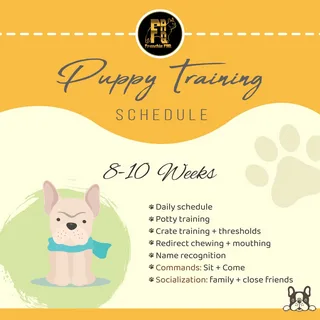
8 to 10 Weeks Old Puppy Schedule
| Time | Activity |
| 6:00 AM | Wake up and potty outside |
| 6:15 AM | Breakfast |
| 6:30 AM | Potty break |
| 8:00 AM | Potty break |
| 9:30 AM | Potty break |
| 11:00 AM | Potty break |
| 12:00 PM | Lunch |
| 12:15 PM | Potty break |
| 2:00 PM | Potty break |
| 4:00 PM | Potty break |
| 5:00 PM | Dinner |
| 5:15 PM | Potty break |
| 7:00 PM | Potty break |
| 9:00 PM | Final potty break |
| Night | One overnight potty break if needed |
Young puppies may need bathroom breaks every 1 to 2 hours.
3 to 4 Months Old Puppy Schedule
At this age, puppies gain better bladder control.
| Time | Activity |
| Morning | Potty after waking |
| After meals | Potty within 10–15 minutes |
| After naps | Immediate potty break |
| After playtime | Potty break |
| Evening | Regular bathroom trip |
| Before bed | Final potty break |
Most puppies at this stage need potty breaks every 3 to 4 hours.
Signs Your Puppy Needs to Go Potty
Many accidents happen because owners miss the warning signs. Watch for these behaviors:
- Sniffing the floor
- Walking in circles
- Whining suddenly
- Going toward the door
- Squatting
- Restlessness
When you notice these signs, take your puppy outside immediately.
Common Puppy Potty Training Problems
1. Puppy Keeps Having Accidents Indoors
This is the most common problem. Usually, accidents happen because:
- The puppy waited too long
- The owner missed potty time
- The puppy had too much freedom
Solution
- Take the puppy out more often
- Supervise closely indoors
- Use baby gates or a crate
- Reward outdoor potty success immediately
Never punish your puppy after an accident. Puppies learn better through positive reinforcement.
2. Puppy Pees Right After Coming Inside
Sometimes puppies become distracted outdoors and forget to potty.
Solution
- Stay outside longer
- Use one quiet potty area
- Avoid too much play before potty time
- Reward immediately after they finish
Consistency helps puppies understand the purpose of going outside.
3. Puppy Cries at Night
Young puppies often wake up because they need the bathroom.
Solution
- Take them out calmly
- Avoid play during nighttime breaks
- Keep lights dim
- Return them to bed quietly
Most puppies sleep through the night after a few weeks.
4. Puppy Refuses to Potty Outside
Some puppies feel scared outdoors because of sounds, weather, or unfamiliar places.
Solution
- Choose a quiet potty area
- Use encouraging words
- Stay patient and calm
- Reward every success with treats and praise
Never force or scare your puppy during training.
Crate Training for Potty Training
Crate training can make potty training much easier. Dogs naturally avoid dirtying their sleeping area.
Benefits of Crate Training
- Prevents indoor accidents
- Builds routine
- Helps nighttime training
- Keeps puppies safe
The crate should be large enough for the puppy to stand and turn around, but not too large.
Do not leave puppies inside the crate for very long periods.
Best Potty Training Tips for Fast Results
Create a Consistent Routine
Take your puppy outside at the same times every day. Consistency builds habits faster.
Use the Same Potty Spot
The smell helps puppies recognize the bathroom area.
Reward Good Behavior Immediately
Praise your puppy right after they potty outside. Use treats, happy words, or gentle petting.
Good examples:
- “Good potty!”
- “Great job!”
- “Well done!”
Watch Food and Water Timing
Feed your puppy at regular times every day. Scheduled meals create predictable bathroom habits.
Avoid giving large amounts of water right before bedtime.
Clean Accidents Properly
Dogs may return to dirty spots if smells remain.
Use enzyme cleaners to remove odors completely.
How Long Does Puppy Potty Training Take?
Every puppy learns differently. Some puppies learn within a few weeks, while others may take several months.
Factors that affect training speed include:
- Breed
- Age
- Consistency
- Owner patience
- Previous habits
Most puppies become reliable between 4 and 6 months old.

Indoor vs Outdoor Potty Training
Outdoor Potty Training
This is the most common method. Puppies learn to use grass, dirt, or outdoor areas.
Advantages
- Cleaner home
- Better long-term habits
- Easier for adult dogs
Indoor Potty Pads
Some owners use puppy pads inside apartments or during bad weather.
Advantages
- Helpful for small puppies
- Useful in apartments
- Good during storms or emergencies
Disadvantages
- May confuse some puppies
- Harder transition to outdoor training
Choose the method that matches your lifestyle.
Potty Training Small Breed Puppies
Small dogs usually have smaller bladders and need more frequent bathroom breaks.
Breeds like:
- Chihuahuas
- Pomeranians
- Yorkies
- Maltese
may need extra patience and shorter potty intervals.
Potty Training Large Breed Puppies
Large breeds often gain bladder control faster but still need routine training.
Popular large breeds include:
- Labrador Retrievers
- German Shepherds
- Golden Retrievers
Even large puppies benefit from a strict schedule.
Mistakes to Avoid During Potty Training
Punishing Accidents
Yelling or hitting creates fear and confusion.
Inconsistent Schedule
Changing potty times slows learning.
Giving Too Much Freedom
Puppies should be supervised until fully trained.
Skipping Rewards
Positive reinforcement helps puppies learn faster.
When to Contact a Veterinarian
Sometimes potty problems are linked to health issues.
Contact a vet if your puppy:
- Urinates very frequently
- Has diarrhea often
- Cries while urinating
- Suddenly loses potty training progress
Medical problems like infections may need treatment.
High-Quality FAQs About Puppy Potty Training
How often should I take my puppy outside?
Young puppies usually need potty breaks every 1 to 2 hours during the day.
Should I wake my puppy at night for potty breaks?
Very young puppies may need one nighttime bathroom trip. Older puppies usually sleep longer.
What is the fastest way to potty train a puppy?
Consistency, rewards, supervision, and a strict schedule are the fastest training methods.
How long can puppies hold their bladder overnight?
Most puppies can hold it longer at night, but young puppies still need occasional breaks.
Can I use puppy pads and outdoor training together?
Yes, but some puppies may become confused. Consistency is important.
Why does my puppy pee after playing?
Excitement and physical activity increase the need to urinate.
Is crate training necessary?
Not always, but crate training helps many puppies learn faster and prevents accidents.
When will my puppy stop having accidents?
Most puppies improve greatly between 4 and 6 months with regular training.
Final Thoughts
Puppy potty training takes patience, consistency, and daily effort. Every puppy learns at a different speed, so small accidents are normal during the process. A simple potty training schedule helps your puppy understand where and when to use the bathroom.
Stay calm, reward success, and follow a regular routine every day. With time and practice, your puppy will develop strong bathroom habits and become a happy, confident companion.

World Dog Care offers simple dog care tips, healthy food guides, training advice, and trusted information for happy pets.